


LIC seeks calibrated rollout of IRDAI’s proposed commission norms, flags agents' interests
November 10, 2026
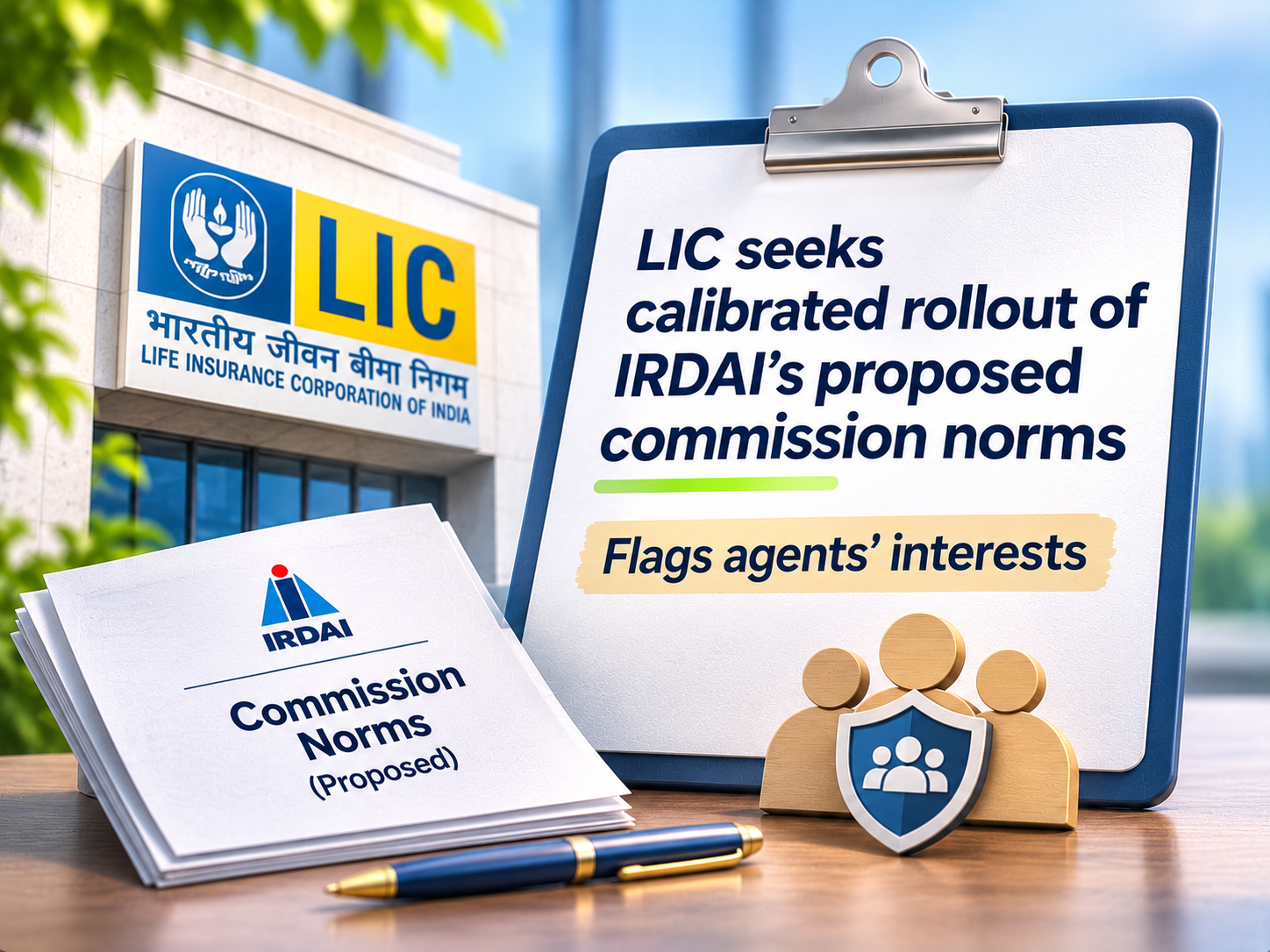
LIC said the rollout of the insurance regulator’s proposed commission norms should be done in a calibrated manner, keeping in mind that insurers operate with different distribution models and that agents’ long-term interests must be protected, according to MD & CEO R Doraiswamy.
Speaking to Moneycontrol, Doraiswamy said LIC has submitted a data-backed response to IRDAI and also included suggestions gathered from its agent community.
He did not share LIC’s specific recommendations since the consultation is still in progress, but said the reforms are a positive step toward making life insurance cheaper, easier to access, and more credible.
At the same time, he said the framework must reflect the fact that insurers vary in business models, distribution capabilities, and operating needs.
He noted that life insurance is a long-duration business that depends on trust, and the broader aim should be to make insurance something customers increasingly choose to buy rather than something that must be pushed.
Doraiswamy said the commission changes should be seen as part of IRDAI’s wider push to strengthen policyholder confidence and trust in the sector.
He referred to other efforts such as curbs on mis-selling and initiatives that help customers compare products through market institutions as aligned with the same goal.
He described the regulator’s move as welcome.
He also said distribution costs—especially for institutional distributors—rose after the earlier cap on commission expenses was removed in 2003, with such costs later being absorbed under the overall expense of management (EOM) framework.
With open architecture enabling corporate agents and institutional distributors to offer products from multiple insurers, distributors gained more leverage to negotiate higher remuneration, he said.
He added that bringing distribution costs back to a reasonable level so customers receive better value is a positive outcome.
However, he cautioned that a one-size-fits-all approach may not suit the different distribution structures across insurers. He pointed out that LIC has a strong individual agency base, while the proposed framework is expected to affect institutional distribution more.
He also noted that the consultation paper proposes different distribution cost structures for individual distribution partners (IDPs) and institutional distribution entities (IDEs).
LIC has engaged with agents across various groups and used their inputs in its submission.
Doraiswamy said LIC met agents, exchanged views, collected their feedback, consolidated it, and used it while finalising its response to the regulator.
He said LIC considers agents not just as intermediaries but as long-term partners in the organisation’s growth, and their interests go beyond the commissions earned in any single year.
He said LIC has introduced steps to support agents over the long term, including group term cover, group medical insurance, and gratuity for those associated for longer periods.
He reiterated that LIC views its agents as a core, long-standing pillar and as partners in progress.
He added that the social security benefits provided to agents are meant for longer-term support and are not directly linked to the policies sold in a particular year.
He also said the life insurance sector should continue to generate employment by attracting the right talent and mindset into individual distribution.
He said these aspects were included in LIC’s feedback to IRDAI.
Separately, on EOM norms, Doraiswamy said LIC will work toward the 10 percent EOM level indicated by the regulator over the longer term.
He said the regulator has recognised that LIC is currently below the targeted EOM limit expected at the end of five years, while also stating that insurers already within limits should move toward the 10 percent benchmark.
Doraiswamy said LIC plans to move in that direction by improving operational efficiency, increasing digital adoption, and taking steps to optimise organisational expenses.
He said LIC will pursue this through efficiency improvements, digital initiatives, and other measures aimed at better cost optimisation.
Source: MoneyControl
Related Posts
IRDAI's Risk-Based Capital framework: What it means for India's insurance industry
IRDAI’s proposed risk-based capital regime could change insurers’ solvency needs and product economics, impacting how MFDs position insurance-linked solutions alongside investments.
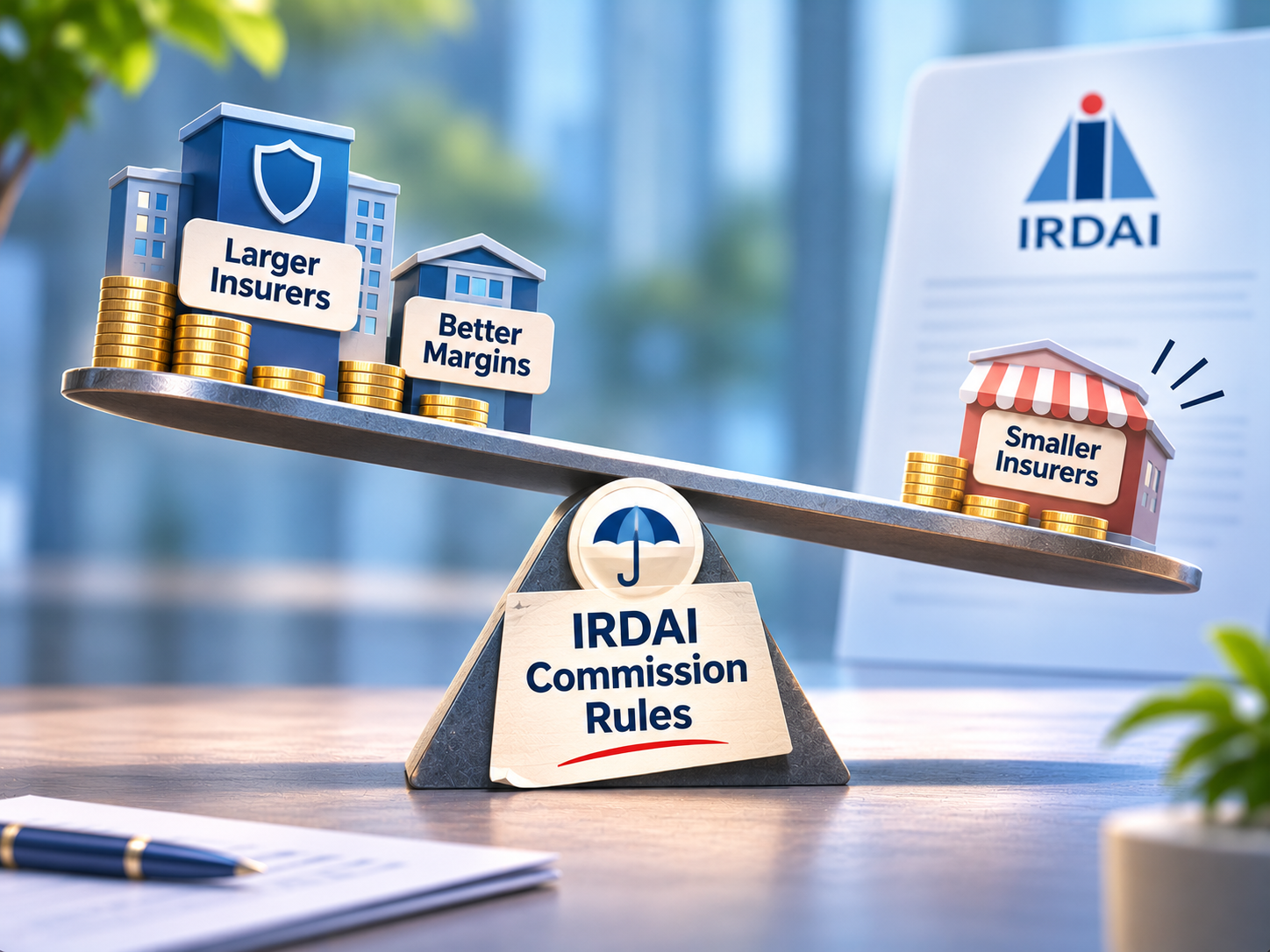
Why IRDAI's proposed commission rules could distort insurance market competition
IRDAI’s proposed commission caps could reshape distributor economics by disadvantaging open-architecture intermediaries and potentially reducing competition and customer choice.

IRDAI digs into life insurers' costs beyond commissions
Irdai’s deeper scrutiny of life insurers’ non-commission expenses signals broader cost and distribution reforms that could reshape product pricing and payout structures for distributors over time.

IRDAI's Risk-Based Capital framework: What it means for India's insurance industry
IRDAI’s proposed risk-based capital regime could change insurers’ solvency needs and product economics, impacting how MFDs position insurance-linked solutions alongside investments.
Why IRDAI's proposed commission rules could distort insurance market competition
IRDAI’s proposed commission caps could reshape distributor economics by disadvantaging open-architecture intermediaries and potentially reducing competition and customer choice.

What changed inside India's insurance regulator?
Irdai’s unusually frank data on commissions and costs signals a serious push to reform insurance distribution, which could reshape how protection products are sold to your clients.