



IRDAI digs into life insurers' costs beyond commissions
August 3, 2026

Mumbai: The Insurance Regulatory and Development Authority of India (IRDAI) has, for the first time, asked life insurers to submit granular data on their operating expenses excluding commissions, indicating that its review of distribution costs will now go beyond just agent payouts, according to people aware of the development.
Insurers have been instructed to report operating expenses, net of commissions, as a percentage of premium. This parameter has not been tracked separately by the regulator earlier. Until now, Irdai mainly monitored the overall Expenses of Management (EOM), which clubbed commissions and operating expenses under a single regulatory ceiling.
This step precedes a discussion paper on distribution reforms that IRDAI plans to release by the end of July. The paper is not expected to fix specific commission rates, but will likely outline broad principles for distribution structure, customer outcomes and remuneration. Detailed, product-wise commission rules are expected to be taken up later after wider industry consultations.
“The regulator has always focused on overall Expenses of Management, which include both commissions and operating expenses. This is the first time insurers have been told to separate operating expenses from commissions,” said a senior insurance executive involved in the discussions.
The fresh data requirement indicates that Irdai is assessing whether cutting the total cost of distributing insurance demands a closer look at all expense components, not just commissions.
Historically, commissions make up about 55-60% of insurers’ acquisition and operating costs, with the balance coming from staff costs, technology, branches, administration, underwriting, servicing and other overheads. Over the last year, debate in the sector has largely focused on rationalising commissions after the new EOM rules came into force. The regulator now appears to believe that trimming commissions alone may not significantly lower policy prices if operating expenses remain high.
“The view seems to be that if the goal is to make products more affordable for customers, operating expenses must also be examined. Simply reducing commissions will not fully bring down product costs if the rest of the cost base stays elevated,” another industry executive said.
This exercise is also linked to findings in the Reserve Bank of India’s June 2026 Financial Stability Report, which highlighted a widening gap in the cost structures of public and private life insurers.
The RBI noted that private life insurers have almost doubled their commission expense ratio from about 4.5% in 2021-22 to 9.1% in 2025-26 as they leaned on commissions to grow distribution, while state-owned insurers have seen only a slight rise in commission outgo over the same period.
Sources added that IRDAI is expected to roll out the proposed distribution reforms in phases.
Related Posts
IRDAI's Risk-Based Capital framework: What it means for India's insurance industry
IRDAI’s proposed risk-based capital regime could change insurers’ solvency needs and product economics, impacting how MFDs position insurance-linked solutions alongside investments.
LIC seeks calibrated rollout of IRDAI’s proposed commission norms, flags agents' interests
IRDAI’s proposed commission and expense norms could reshape insurance distribution economics, so MFDs selling insurance should track how payouts and cost structures may change across channels.
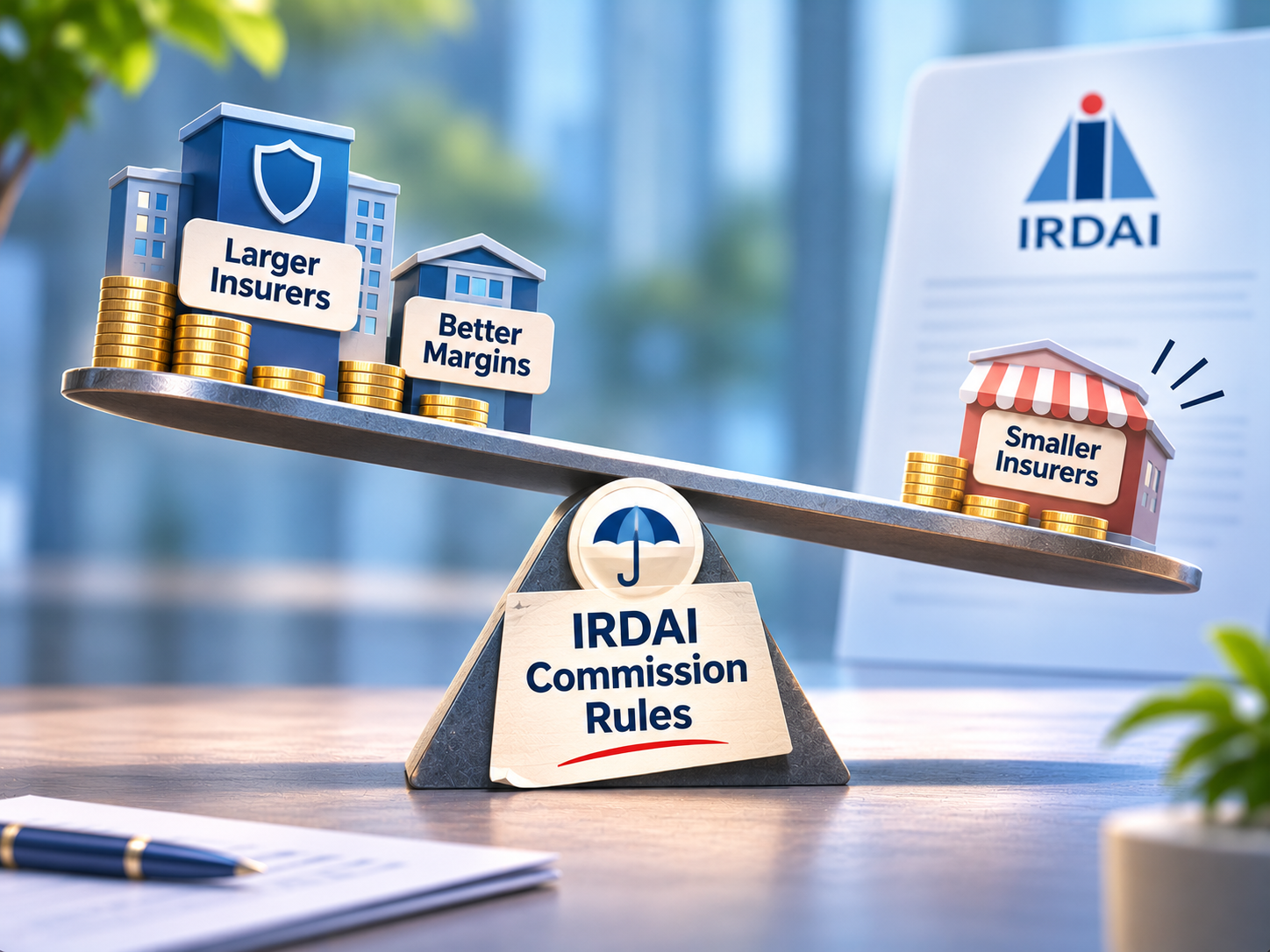
Why IRDAI's proposed commission rules could distort insurance market competition
IRDAI’s proposed commission caps could reshape distributor economics by disadvantaging open-architecture intermediaries and potentially reducing competition and customer choice.


IRDAI's Risk-Based Capital framework: What it means for India's insurance industry
IRDAI’s proposed risk-based capital regime could change insurers’ solvency needs and product economics, impacting how MFDs position insurance-linked solutions alongside investments.
LIC seeks calibrated rollout of IRDAI’s proposed commission norms, flags agents' interests
IRDAI’s proposed commission and expense norms could reshape insurance distribution economics, so MFDs selling insurance should track how payouts and cost structures may change across channels.
Why IRDAI's proposed commission rules could distort insurance market competition
IRDAI’s proposed commission caps could reshape distributor economics by disadvantaging open-architecture intermediaries and potentially reducing competition and customer choice.

