


What changed inside India's insurance regulator?
October 13, 2026
When the Insurance Regulatory and Development Authority of India (Irdai) issued its consultation paper on insurance distribution last month, it initially seemed routine. Instead, the document turned out to be strikingly transparent and highly detailed, enough for the author to derive material for two separate columns in just two weeks.
The first analysis drew on Irdai’s own benefits data to highlight that insurers pay out nearly five times more on policy surrenders than they do to nominees of deceased policyholders. The second used complaint statistics to show that customers who persist with their grievances and escalate them through the system tend to prevail more often than insurers at every stage. The author, who has long criticised the skewed incentives in the insurance business, did not expect such clear confirmation to come directly from Irdai’s disclosures.
While public discussion has largely focused on the proposed commission caps in the paper, the author is more interested in understanding how such an unusually forthright document emerged from the regulator.
In the second part of the paper, almost every page contains data points that Irdai had never previously made public. For instance, insurers are identified by codes and ranked by cost metrics. Banks are listed with details of how many insurers they are partnered with and the cost of each such arrangement.
One revelation is that commissions on group health insurance reach as high as 93% of premiums for some insurers. Irdai itself calls this “unusual and counter-intuitive,” because group policies typically see lower claim ratios and corporate buyers should, in theory, have strong negotiating power. Given Irdai’s historical approach, the use of such language about high costs suggests a clear shift in stance.
The paper also documents other distorted incentives. Where a bank has an exclusive tie-up with a single insurer, the average payout is 13% of new business premium. However, when banks partner with multiple insurers, the average payout jumps to 33% and can go up to 72%.
This intra-bank competition among insurers often harms customers instead of helping them. The bank is incentivised to promote the insurer that offers it the highest payout, rather than the product that best fits the client’s needs.
Motor insurance provides another telling example. Since a vehicle cannot be delivered without insurance, the only decision at the showroom is which insurer to choose, not whether to buy a policy. Yet intermediaries still earn average commissions of up to 38%, and practices like dealers forcing buyers to opt for specific insurers are widespread.
Most people who have purchased a new car in recent decades will recognise this experience. What is different now is that Irdai’s own, previously unpublished data backs up these observations.
Many observers attribute this new openness to a change at the top. Ajay Seth, a long-time finance ministry official who retired as economic affairs secretary, took over as Irdai chairman in July 2025.
However, the author notes that one individual cannot transform an institution alone. A broader segment of the government appears to have accepted that abusive practices in the insurance sector have gone too far.
Despite the encouraging tone of the paper, the author cautions against uncritical optimism. The government also owns LIC and the largest general insurers, creating a structural conflict of interest. Any meaningful clean-up of distribution and commissions will reduce insurer profits and, consequently, the dividends the government receives.
This does not imply that the consultation paper lacks sincerity; its contents suggest the opposite. The point is that a good diagnosis and a well-designed treatment plan are not enough—the outcome depends on whether the patient actually recovers. In regulatory terms, that means waiting to see the final regulations and whether the proposed commission caps withstand industry pushback.
Having tracked Irdai for many years with little reason to be positive, the author concludes that, for the first time, there is genuine cause for hope.
Dhirendra Kumar is the founder and chief executive officer of Value Research, an independent investment advisory firm.
Source: mint
Related Posts
IRDAI's Risk-Based Capital framework: What it means for India's insurance industry
IRDAI’s proposed risk-based capital regime could change insurers’ solvency needs and product economics, impacting how MFDs position insurance-linked solutions alongside investments.
LIC seeks calibrated rollout of IRDAI’s proposed commission norms, flags agents' interests
IRDAI’s proposed commission and expense norms could reshape insurance distribution economics, so MFDs selling insurance should track how payouts and cost structures may change across channels.
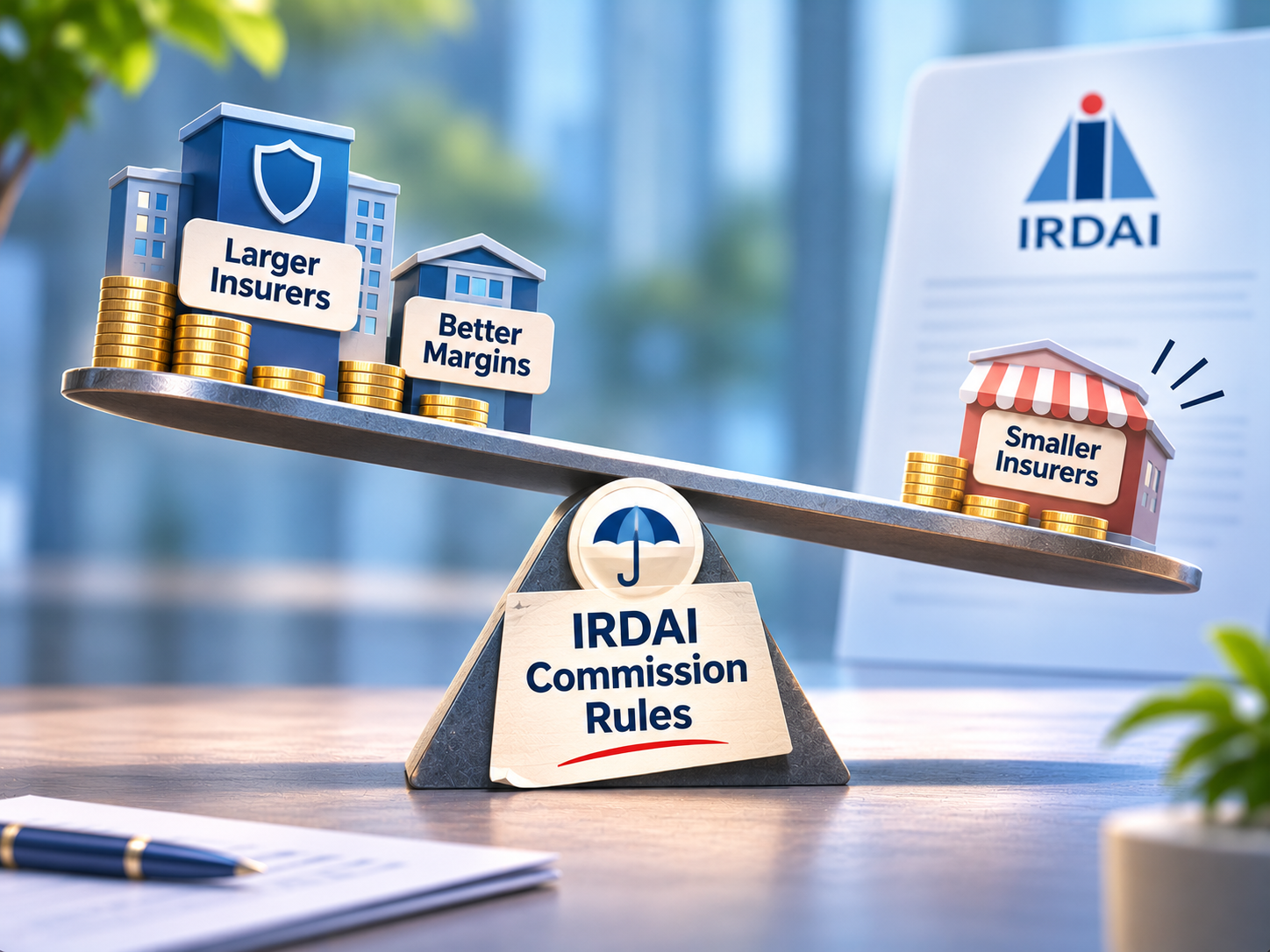
Why IRDAI's proposed commission rules could distort insurance market competition
IRDAI’s proposed commission caps could reshape distributor economics by disadvantaging open-architecture intermediaries and potentially reducing competition and customer choice.


IRDAI's Risk-Based Capital framework: What it means for India's insurance industry
IRDAI’s proposed risk-based capital regime could change insurers’ solvency needs and product economics, impacting how MFDs position insurance-linked solutions alongside investments.
LIC seeks calibrated rollout of IRDAI’s proposed commission norms, flags agents' interests
IRDAI’s proposed commission and expense norms could reshape insurance distribution economics, so MFDs selling insurance should track how payouts and cost structures may change across channels.
Why IRDAI's proposed commission rules could distort insurance market competition
IRDAI’s proposed commission caps could reshape distributor economics by disadvantaging open-architecture intermediaries and potentially reducing competition and customer choice.