



IRDAI may implement insurance commission caps as early as January
October 9, 2026

The Insurance Regulatory and Development Authority of India (IRDAI) is weighing the introduction of proposed commission caps for insurance distributors as early as January 1, with April 1 also being evaluated as an alternative start date. These measures are intended to reduce costs for policyholders and broaden insurance penetration, but the announcement has already sparked a sharp decline in the share prices of insurance-related firms such as PB Fintech and Turtlemint.
The regulator is moving ahead with wide-ranging reforms to the insurance distribution framework that could take effect from January. This overhaul has already hit valuations of insurers and intermediaries. In an interview, Girija Subramanian, a whole-time member at IRDAI, said the two effective dates under discussion are January 1 and April 1. The possibility of a January rollout signals the regulator’s strong intent to change the underlying economics of insurance sales in India, after concluding that earlier liberalisation did not sufficiently rein in costs.
In its latest consultation, IRDAI has proposed ceilings on commissions that insurers can pay to brokers and other intermediaries, with the objective of lowering charges for customers and encouraging higher insurance uptake. These caps would cover most major insurance segments, including health, life, property, and casualty. Alongside this, the regulator plans to gradually enforce tighter limits on management expenses to further reduce overall costs.
The commission-cap proposal has led to a steep selloff in stocks tied to insurance distribution. PB Fintech Ltd., which runs the online insurance marketplace Policybazaar, fell 36% when the proposals were unveiled, while Turtlemint Fintech Solutions Ltd. has lost about half its value since then. Analysts estimate that fee income for banks and digital brokers in high-margin segments could drop by up to 90%. For fintech platforms such as PB Fintech and Turtlemint, a proposed 10% reduction in new business commission rates is expected to cut earnings by roughly 10%–12%, according to Jefferies Financial Group Inc.
The Insurance Brokers Association of India has cautioned that the changes could put as many as one million jobs at risk. Brokers are currently engaging with IRDAI to seek modifications to the draft framework.
Subramanian, who oversees distribution at the regulator, dismissed fears of widespread job losses. She argued that the reforms should ultimately create more employment opportunities by broadening the distribution network and lowering barriers for new entrants into the insurance space. According to IRDAI, commission payouts have been rising faster than premiums since rules were eased in 2023, and the increased spending on distribution has not translated into a proportionate rise in insurance coverage.
Data cited by the regulator show that expense ratios at private life insurers have increased to around 22% of total premiums from 16% in FY 2021. For private general insurers, expenses have climbed to about 32% from 25% in FY 2019. In some instances, incentives and rewards to distributors have added 30%–60% on top of basic commissions.
The reform package also seeks to push insurance deeper into smaller markets. Distributors generating business in towns with populations below one million could receive an extra 10% of the applicable commission cap, which would rise to 20% for locations with fewer than 50,000 people. IRDAI is additionally proposing to relax entry norms and permit distributors to engage in other financial and non-financial activities.
To help insurers adjust, the regulator plans to phase in stricter expense limits over a five-year period, with the first interim target set for the financial year ending March 2029.
Insurers, intermediaries, and other stakeholders have until October 25 to send their feedback on the consultation paper. Subramanian said IRDAI will review these inputs before issuing draft regulations, which will then be opened for another round of public comments ahead of finalisation.
IRDAI’s approach has some similarities with developments in other Asian markets. In 2023, China’s regulator required that commissions paid by insurers align with rates filed with the authority, effectively imposing a cap. This led to an average 30% drop in bancassurance commissions and forced banks and insurers to renegotiate their distribution arrangements.
The Indian regulator maintains that commission caps need to be implemented more quickly than expense reductions. A gradual rollout of caps, it argues, could prompt distributors to front-load sales before each step-down, potentially heightening mis-selling risks. Subramanian noted that while there is a strong case for early implementation, ensuring the reforms are properly designed is more important than speed.
Source: BusinessLine
Related Posts
IRDAI's Risk-Based Capital framework: What it means for India's insurance industry
IRDAI’s proposed risk-based capital regime could change insurers’ solvency needs and product economics, impacting how MFDs position insurance-linked solutions alongside investments.
LIC seeks calibrated rollout of IRDAI’s proposed commission norms, flags agents' interests
IRDAI’s proposed commission and expense norms could reshape insurance distribution economics, so MFDs selling insurance should track how payouts and cost structures may change across channels.
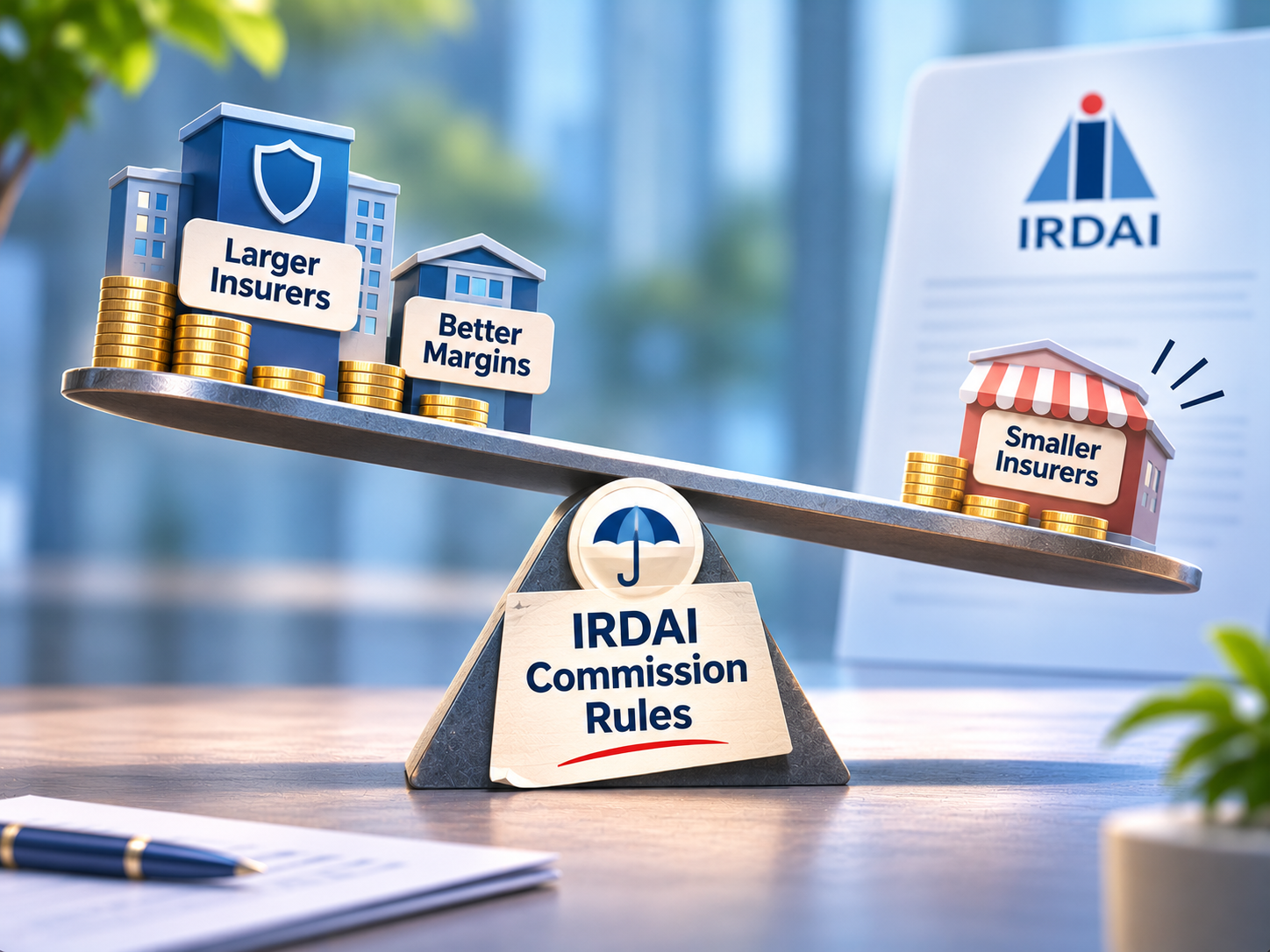
Why IRDAI's proposed commission rules could distort insurance market competition
IRDAI’s proposed commission caps could reshape distributor economics by disadvantaging open-architecture intermediaries and potentially reducing competition and customer choice.


IRDAI's Risk-Based Capital framework: What it means for India's insurance industry
IRDAI’s proposed risk-based capital regime could change insurers’ solvency needs and product economics, impacting how MFDs position insurance-linked solutions alongside investments.
LIC seeks calibrated rollout of IRDAI’s proposed commission norms, flags agents' interests
IRDAI’s proposed commission and expense norms could reshape insurance distribution economics, so MFDs selling insurance should track how payouts and cost structures may change across channels.
Why IRDAI's proposed commission rules could distort insurance market competition
IRDAI’s proposed commission caps could reshape distributor economics by disadvantaging open-architecture intermediaries and potentially reducing competition and customer choice.