RBI’s two fintech SROs: Who sets the rules, monitors compliance and acts against violations?
November 11, 2026
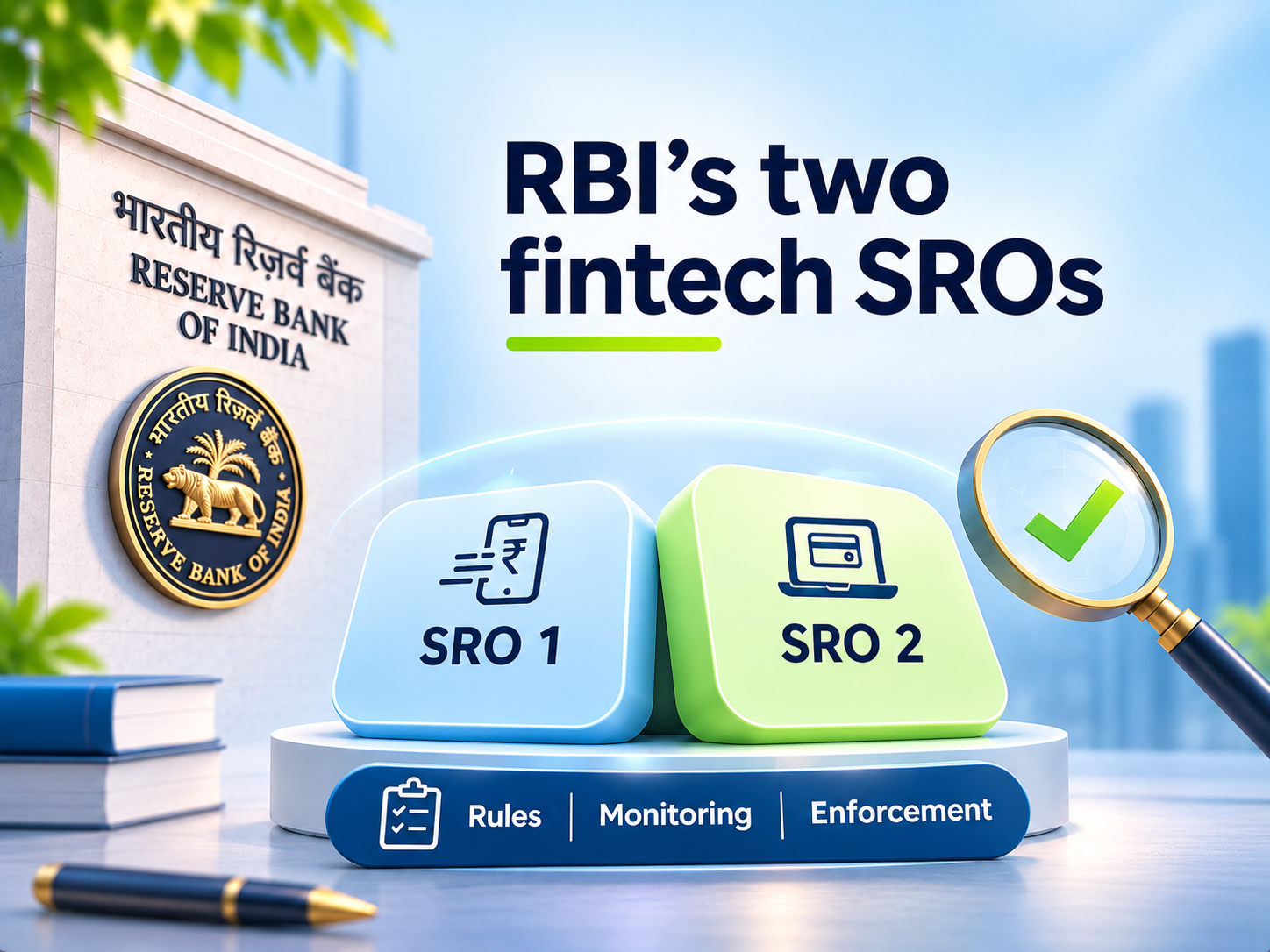
The Reserve Bank of India (RBI) has recognised the Unified Fintech Forum (UFF) as the second Self-Regulatory Organisation for the FinTech Sector (SRO-FT), widening its industry-led supervision model. UFF now joins the FinTech Association for Consumer Empowerment (FACE), which became the first SRO-FT in August 2024.
This step comes as fintech firms operate across a broad set of activities such as digital lending, payments, wealth management and other tech-driven financial services. For the RBI, directly supervising every operational practice and new business model in such a fast-changing space is difficult.
The SRO framework is intended to bridge this gap by formally involving industry bodies in setting standards, overseeing members and encouraging responsible behaviour. Even so, the RBI continues to hold statutory regulatory authority, and the SROs function under RBI-defined limits and remain answerable to the central bank.
What is a Self-Regulatory Organisation?
An SRO-FT is a not-for-profit industry body that the RBI recognises to build and promote norms for conduct, governance and compliance among fintech companies.
Unlike a typical trade association, an RBI-recognised SRO-FT operates under the RBI’s May 2024 framework with a defined mandate. It is expected to create codes of conduct, establish benchmarks, supervise member behaviour and act when its standards are breached.
Under the RBI framework, an SRO-FT must be incorporated as a Section 8 not-for-profit company under the Companies Act, 2013. The framework also specifies conditions around membership representation, governance standards, independence, board structure and managing conflicts of interest.
The intent is that an SRO should not only serve member business interests, but also support the broader fintech ecosystem and protect consumers.
What powers does an SRO-FT have?
Although an SRO does not have statutory law-making powers like the RBI, it can exercise meaningful oversight and enforcement over its members, including:
Creating codes of conduct, such as rules for fair lending, clear pricing, ethical collections and data privacy.
Carrying out monitoring and audits through periodic reviews and compliance checks to spot unethical practices early.
Running dispute resolution and grievance redressal processes, including handling escalated customer complaints.
Taking enforcement steps like warnings, administrative penalties, and suspension or cancellation of membership for violations.
Supporting regulatory coordination by acting as an interface with the RBI—sharing market insights, flagging emerging risks and providing inputs on regulatory matters.
These functions do not replace statutory regulation. An SRO cannot revoke a bank or NBFC licence, supersede RBI directions, or use the RBI’s legal enforcement powers.
How is it different from RBI?
The RBI is the statutory central bank and sovereign regulator focused on systemic stability, monetary policy and macro-prudential regulation. It issues legally binding directions and can impose legal penalties, cancel licences or stop operations.
In contrast, an SRO-FT is an industry-led body authorised and overseen by the RBI, focused on operational conduct and compliance at a micro level. It issues best-practice codes and ethical standards, and can counsel, reprimand, levy reasonable monetary penalties, and suspend or remove members.
What role will the two recognised fintech SROs play?
FACE was recognised on August 28, 2024 and was formed with a focus on ethical digital lending and consumer protection. Its emphasis includes fair collection practices, borrower grievance redressal, preventing predatory lending, addressing dark patterns, protecting data privacy and setting standards for ethical recovery.
UFF was recognised on September 10, 2026 (announced at GFF 2026). It originated as the Digital Lenders Association of India (DLAI), set up in 2016, and later rebranded to expand its scope for SRO recognition. Its coverage is broader across fintech segments, including digital lending, payments, wealthtech and open finance, with objectives such as harmonising API standards, enabling regulatory dialogue, supporting cross-sector compliance and scaling ecosystem growth.
Can self-regulation improve compliance and consumer protection?
Even though the RBI remains the main regulator, fintech innovation moves quickly, making detailed supervision of every new model challenging. By assigning operational monitoring and benchmarking to recognised SROs, the RBI is aiming for a hybrid approach where the industry helps define operating standards while staying accountable to the central bank. Because SROs are closer to daily market developments, they may be able to detect mis-selling, deceptive user interfaces (dark patterns) and predatory lending practices sooner.
What challenges are ahead?
How well the framework works will depend on whether these organisations can apply oversight independently and consistently. Key issues include:
Conflicts of interest, since SROs are industry-led and must monitor their own members; strong governance, independent boards and transparent enforcement are needed to avoid capture or bias.
Jurisdiction limits, as entities that do not join an SRO remain outside its direct control, requiring RBI and law-enforcement action.
Enforcement credibility, since penalties and expulsions matter only if SROs are willing to act even against influential members.
The question of voluntary versus mandatory participation, as long-term impact may depend on whether the RBI later requires all fintechs to be SRO members.
Overlapping regulatory responsibilities, because fintech activities can fall under multiple regulatory regimes; SRO standards must stay aligned with RBI directions and other applicable laws.
Source: ET
Related Posts

SEBI to roll out AI-use rules for capital markets with investor-protection guardrails
MFDs using AI-led tools for client communication or investment processes should prepare for SEBI’s upcoming guardrails on disclosures, accountability and human oversight.

SEBI forms panel to overhaul ICDR rules for IPOs, FPOs and QIPs
SEBI’s review of IPO/FPO/QIP rules could streamline disclosures and processes, potentially boosting primary market activity that impacts equity market sentiment and client interest.

Retail inflation jumps to 6.09% in October
CPI inflation crossing 6% raises the probability of an RBI rate hike, which can impact debt fund returns and client asset-allocation conversations.


SEBI to roll out AI-use rules for capital markets with investor-protection guardrails
MFDs using AI-led tools for client communication or investment processes should prepare for SEBI’s upcoming guardrails on disclosures, accountability and human oversight.
SEBI forms panel to overhaul ICDR rules for IPOs, FPOs and QIPs
SEBI’s review of IPO/FPO/QIP rules could streamline disclosures and processes, potentially boosting primary market activity that impacts equity market sentiment and client interest.
Retail inflation jumps to 6.09% in October
CPI inflation crossing 6% raises the probability of an RBI rate hike, which can impact debt fund returns and client asset-allocation conversations.