


RBI rate hike: How higher rates will impact your EMIs, FDs and debt funds
October 9, 2026

The Reserve Bank of India has raised the repo rate by 25 basis points to 5.50%, marking its first increase since February 2023. The move is driven by rising inflation and geopolitical risks that have pushed crude oil prices higher.
Alongside the hike, the Monetary Policy Committee has changed its stance from ‘neutral’ to ‘calibrated tightening’. According to Indranil Pan, chief economist at Yes Bank, this signals either more rate hikes or a pause ahead. Economists expect total hikes in the current financial year to be in the range of 25–100 basis points.
For retail borrowers, this translates into costlier home, auto and personal loans. On the other hand, savers may see better returns on fixed deposits and bonds.
Impact on borrowers
Home loans on floating rates that are directly linked to the repo rate will feel the impact first, affecting both existing and new customers. Banks have already begun raising rates on fresh loans, especially with the festive season coming up. By Thursday, Punjab National Bank, Bank of Baroda, Bank of India and Indian Bank had all increased their repo-linked benchmark lending rate by 25 basis points.
“I expect the hike to be passed on immediately to new borrowers. State Bank of India will declare its quarterly rate changes by 15 October and other large banks are likely to follow,” said Mangesh Zope, founder of Peaceful-Loans.
For existing borrowers, the timing of the rate pass-through depends on each lender’s reset schedule.
“SBI’s EBLR-linked loans reset on the 15th of every month, while ICICI Bank revises rates once every quarter. NBFCs may transmit the hike faster since it is an increase in rates,” Zope noted.
Once the higher rate kicks in, lenders usually keep the EMI constant and extend the loan tenure. Borrowers can, however, request an EMI increase instead of a tenure extension.
“With another hike or a pause likely, borrowers should closely track their loan tenure.
“A 25-bps hike by itself doesn’t have a large impact. At 7.5% over 25 years, the EMI on a ₹30 lakh loan may go up by around ₹490 a month, by ₹654 on a ₹40 lakh loan and by ₹817 on a ₹50 lakh loan,” said Adhil Shetty, CEO of BankBazaar.
Still, Shetty cautioned that with the possibility of further hikes, borrowers must monitor how their tenure changes.
“Many lenders prefer to lengthen the tenure to keep the EMI unchanged. While this feels more comfortable, it increases the total interest cost,” he said.
A longer tenure means more interest outgo. For instance, consider a ₹50 lakh loan at 7.75% for 20 years. If the rate rises to 8% and the EMI is not changed, the tenure extends by about 11 months and the borrower ends up paying roughly ₹3 lakh more in interest than if the EMI had been raised and the original tenure maintained. Keeping the tenure fixed would increase the EMI by about ₹775 per month.
Stretched repayment
When interest rates rise but EMIs stay the same, a larger share of each EMI goes towards interest and a smaller share towards principal. As a result, the principal reduces more slowly, the repayment period stretches, and the total interest paid over the life of the loan increases.
The effect becomes more severe when cumulative hikes exceed 50 basis points. In the same example, if the rate moves from 7.75% to 8.5% and the EMI is unchanged, the tenure can extend by nearly three years, and the borrower may pay about ₹10 lakh more in interest compared to keeping the 20-year tenure intact and raising the EMI.
This impact is more pronounced for borrowers who still have a long repayment period left, as interest continues to accrue on a larger outstanding principal for more years. Those who are already past 70–80% of their loan tenure will see a smaller impact because most of the interest has already been paid.
Given the rising rate environment, Zope advises increasing EMIs instead of stretching the tenure, provided monthly cash flows allow it. Shetty agrees and suggests making small annual prepayments to curb the additional interest burden.
The hike will also influence new vehicle and personal loans, though the link is less direct than for repo-linked home loans. Higher policy rates raise lenders’ cost of funds, prompting them to reprice new loans.
“New borrowers may find that lenders adjust rates based on their funding costs and the borrower’s risk profile. Existing customers with floating-rate personal or vehicle loans could see their rates go up if lenders pass on the hike, while those on fixed-rate loans may not see an immediate change,” Shetty said.
Impact on depositors
For savers, a rising rate cycle generally supports better returns on new fixed deposits. However, Shetty pointed out that FD rates do not automatically move in line with the repo rate.
“Banks decide how much to raise FD rates depending on their deposit needs, liquidity position and competition for funds. So a 25-bps repo hike does not necessarily mean FD rates will rise by the same amount,” he explained.
Currently, large private banks are offering around 6.3–7% on deposits below ₹1 crore with one- to two-year tenures, while some small finance banks are offering up to 8.1%.
“For depositors, this environment can keep FD rates firm and may allow some room for further upward repricing,” Shetty said.
Existing FDs will continue at their contracted rates, so investors will benefit from higher rates only when they make fresh deposits or renew maturing ones. With more hikes possible, one strategy is to ladder deposits across different maturities so that portions can be reinvested at higher rates if they materialise.
The implications for bonds and debt mutual funds are more nuanced. Since bond prices and yields move inversely, rising yields push down the prices of existing bonds with lower coupons. Debt funds holding such securities then face mark-to-market losses.
The effect is stronger for long-duration bonds, which are more sensitive to rate changes, while shorter-duration portfolios are relatively insulated.
According to Lovaii Navlakhi, managing director and CEO of International Money Matters, much of this RBI hike was already priced into yields, especially at the shorter end, which has limited the immediate impact. He advised investors who may need liquidity soon to be careful about adding duration risk.
“Investors in long-duration funds who need to redeem in the near term could incur losses if yields rise further and bond prices fall,” Navlakhi said. “For long-term investors who can tolerate volatility, higher yields can be an opportunity to gradually build exposure to long-duration funds. But with the RBI’s calibrated tightening stance, further hikes are possible, so the investment horizon becomes critical.”
Focus on accrual
Edelweiss Mutual Fund, in a note, suggested that until there is better visibility on the terminal policy rate, investors should focus on accrual—the interest income from holding bonds—rather than trying to time gains from a future fall in yields. It sees attractive opportunities in AAA-rated bonds maturing in two to three years, offering yields of 7.75–8.25%. Edelweiss expects the repo rate to peak around 6.25% by early 2027.
If the rate-hike cycle remains shallow and growth stays resilient, investors do not need to make drastic changes to their portfolios.
“For investors, it is essentially business as usual when it comes to asset allocation,” said Dhirendra Kumar, founder and CEO of Value Research.
Source: mint
Related Posts

Arbitrage mutual funds swing back to inflows in October 2026 with ₹3,929 crore: Top 5 schemes by 1, 3, 5-year returns
Arbitrage funds saw a sharp flow reversal in Oct 2026 with ₹3,929 crore inflows, highlighting renewed short-term parking demand rather than higher equity risk appetite.
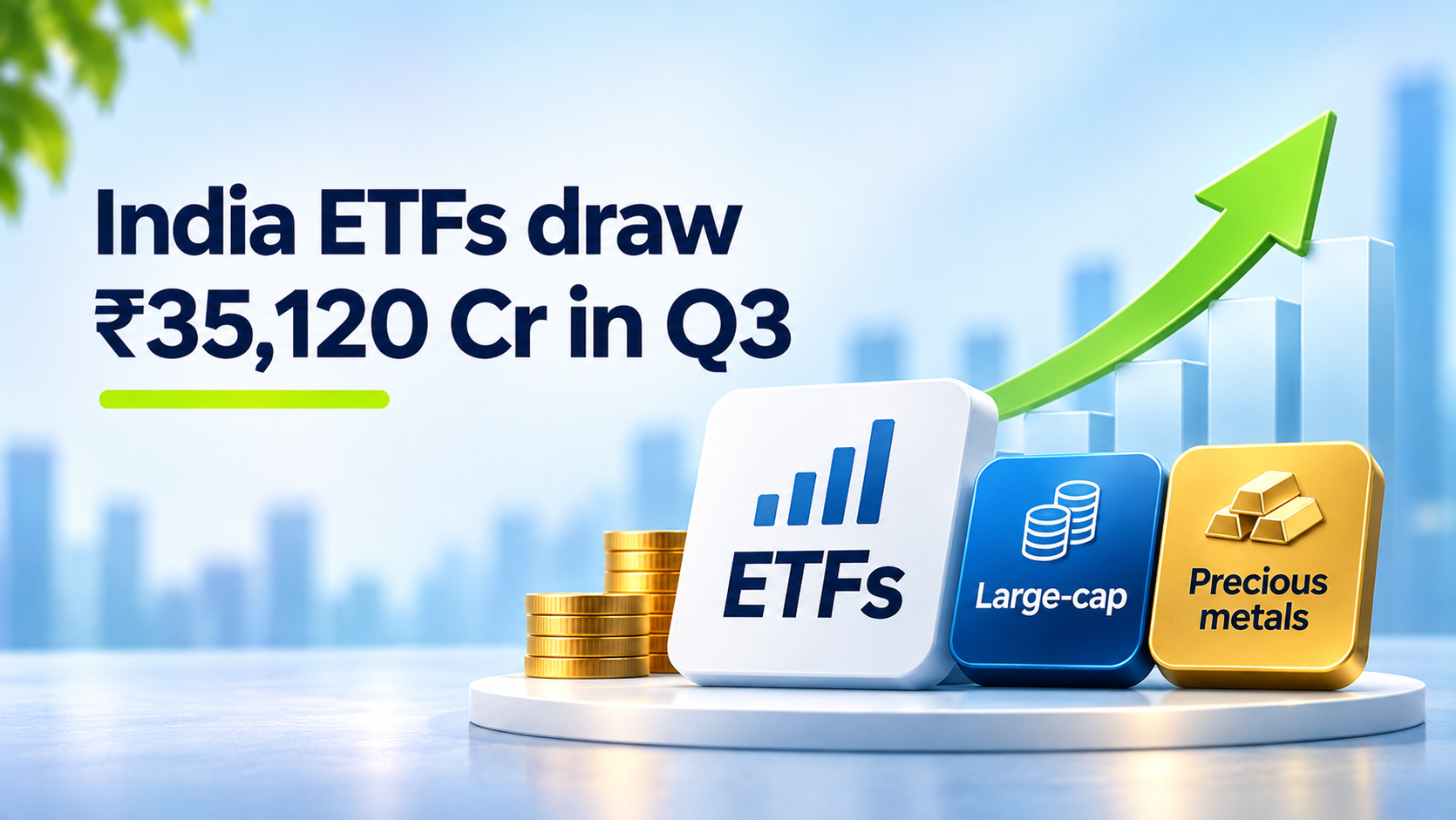
India ETFs draw ₹35,120 crore in Q3 as large-cap, precious metals lead inflows
Q3 ETF inflows stayed strong and concentrated in large-cap index and gold-linked products, signalling where client demand is shifting and where duration risk is being avoided.

Debt Mutual Funds See ₹1 Lakh Crore Outflows in June
Large June redemptions from debt funds are mainly quarter-end, tax-driven flows rather than a lasting shift away from fixed income, so MFDs should focus on explaining this seasonality to clients.


Arbitrage mutual funds swing back to inflows in October 2026 with ₹3,929 crore: Top 5 schemes by 1, 3, 5-year returns
Arbitrage funds saw a sharp flow reversal in Oct 2026 with ₹3,929 crore inflows, highlighting renewed short-term parking demand rather than higher equity risk appetite.
India ETFs draw ₹35,120 crore in Q3 as large-cap, precious metals lead inflows
Q3 ETF inflows stayed strong and concentrated in large-cap index and gold-linked products, signalling where client demand is shifting and where duration risk is being avoided.

Gold ETF inflows beat full-year 2025 total in just 10 months, cross Rs 49,000 crore
Gold ETF inflows have already exceeded last year’s full total, signalling strong client appetite for gold as a long-term diversifier despite a slower October.