


Mutual fund flows decoded: Why AMFI's monthly data matters for investors
August 3, 2026

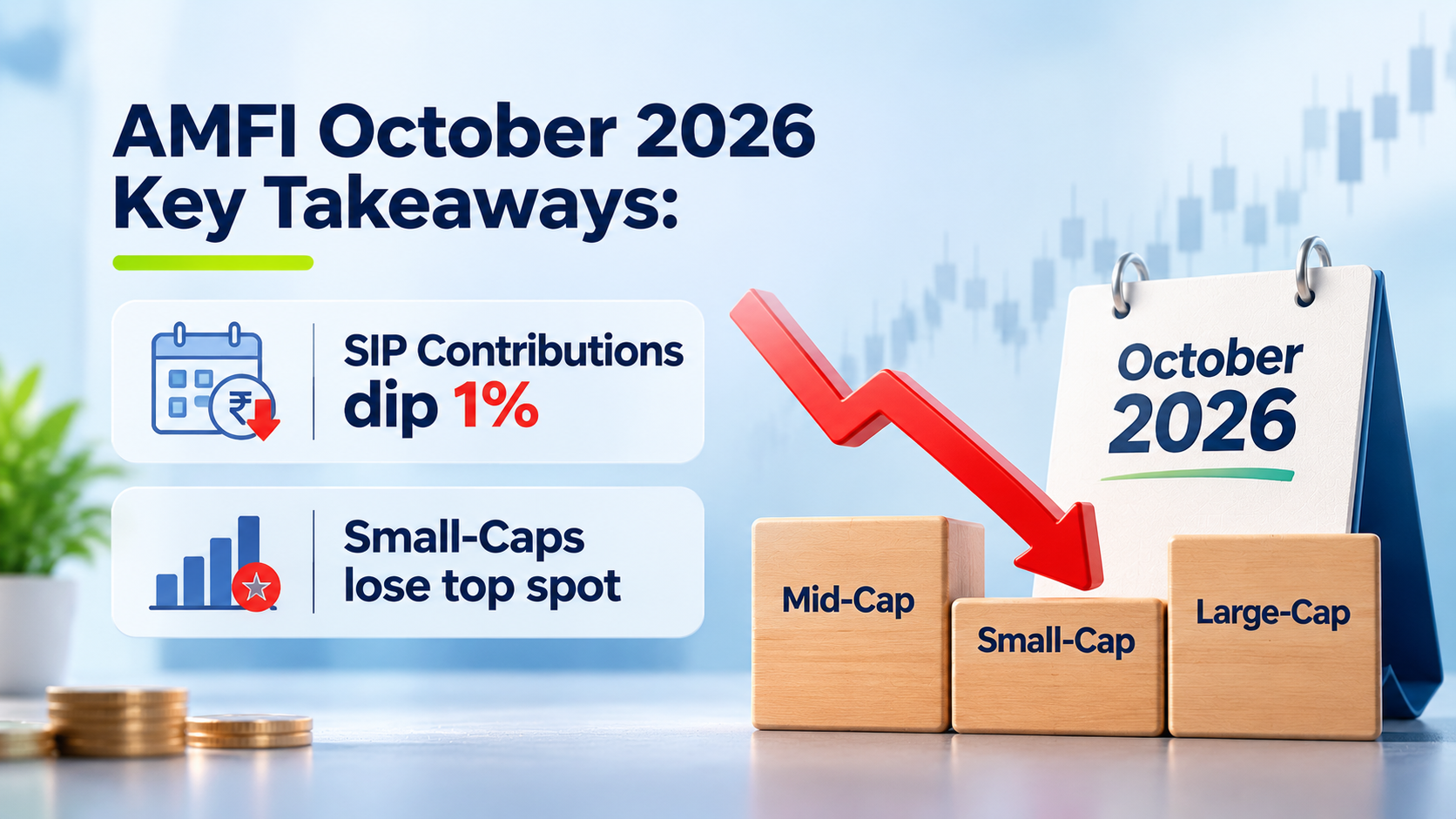
Each month, the mutual fund industry association AMFI publishes detailed numbers on money coming into and going out of various mutual fund categories. Investors and analysts closely watch these figures because they offer insights into sentiment and the direction of capital flows.
WHAT ARE MUTUAL FUND FLOWS?
Fund flows represent the net money added to or withdrawn from mutual funds and their categories during a given month. A net inflow means total investments exceeded redemptions, while a net outflow means more money was pulled out than invested. AMFI releases this data category-wise and sub-category-wise across equity, hybrid and debt funds, as well as ETFs, gold funds and international funds. It also reports monthly collections through SIPs and New Fund Offers (NFOs).
WHY DO THEY MATTER?
Flow data helps indicate how investors are feeling and which types of funds they currently prefer. It shows how money is shifting across different sectors, themes and market segments, giving a broad picture of allocation trends.
HOW CAN INVESTORS INTERPRET FUND FLOWS?
Sustained positive inflows usually point to continued investor confidence, whereas sharp outflows can signal caution or profit-taking. For instance, heavy inflows into mid- and small-cap funds suggest investors are tilting towards those market segments, while outflows from sectoral funds may indicate weaker return expectations there. However, these numbers must be interpreted in context. Outflows from liquid and short-duration debt funds often line up with advance tax payments or quarter-end cash needs of companies, and therefore may not reflect negative sentiment.
WHAT DO THEY SHOW ABOUT EQUITY-ORIENTED SCHEMES?
Robust inflows into equity-oriented funds show that investors are directing more money into equities, but this does not automatically imply that stock indices will move up. Equity markets are influenced by multiple participants domestic institutions, insurance companies, FIIs and retail investors. For example, even if equity mutual funds see inflows of Rs 25,000 crore in a month, the market can still fall if FIIs sell shares worth Rs 40,000 crore, as their selling pressure can dominate domestic buying. Also, if a large chunk of inflows comes towards the month-end, fund managers may deploy this cash gradually over the following days, meaning not all inflows immediately convert into stock purchases.
WHAT SHOULD INVESTORS KEEP IN MIND WHILE READING FUND FLOWS?
Fund flow data is best used to assess sentiment and liquidity conditions, not as a direct buy or sell trigger. SIP contributions are generally viewed as more stable and long term, but overall flows can be heavily influenced by recent market performance and may reverse if returns soften. While a phase of strong inflows can create a supportive environment for markets, long-term outcomes are ultimately determined by company fundamentals, valuations, earnings, interest rates and FII activity. Investors should therefore combine fund flow trends with these broader factors when making investment decisions.
Related Posts

Arbitrage mutual funds swing back to inflows in October 2026 with ₹3,929 crore: Top 5 schemes by 1, 3, 5-year returns
Arbitrage funds saw a sharp flow reversal in Oct 2026 with ₹3,929 crore inflows, highlighting renewed short-term parking demand rather than higher equity risk appetite.

India ETFs draw ₹35,120 crore in Q3 as large-cap, precious metals lead inflows
Q3 ETF inflows stayed strong and concentrated in large-cap index and gold-linked products, signalling where client demand is shifting and where duration risk is being avoided.

Debt Mutual Funds See ₹1 Lakh Crore Outflows in June
Large June redemptions from debt funds are mainly quarter-end, tax-driven flows rather than a lasting shift away from fixed income, so MFDs should focus on explaining this seasonality to clients.


Arbitrage mutual funds swing back to inflows in October 2026 with ₹3,929 crore: Top 5 schemes by 1, 3, 5-year returns
Arbitrage funds saw a sharp flow reversal in Oct 2026 with ₹3,929 crore inflows, highlighting renewed short-term parking demand rather than higher equity risk appetite.
India ETFs draw ₹35,120 crore in Q3 as large-cap, precious metals lead inflows
Q3 ETF inflows stayed strong and concentrated in large-cap index and gold-linked products, signalling where client demand is shifting and where duration risk is being avoided.

Gold ETF inflows beat full-year 2025 total in just 10 months, cross Rs 49,000 crore
Gold ETF inflows have already exceeded last year’s full total, signalling strong client appetite for gold as a long-term diversifier despite a slower October.