Fund houses tread cautiously on SEBI's life-cycle funds
August 3, 2026

MUMBAI: Mutual fund houses are taking a guarded approach to the newly launched life-cycle funds, even though the Securities and Exchange Board of India (SEBI) has positioned them as straightforward, goal-linked products that automatically dial down risk as investors get closer to their financial targets.
A senior executive at a fund house, requesting anonymity, said that while life-cycle funds could have long-term potential, there is little enthusiasm right now because the environment for New Fund Offers (NFOs) is weak. In their view, this is not an ideal time to roll out fresh schemes.
Life-cycle funds operate on a preset “glide path”, progressively moving money from growth assets like equities into debt as the fund nears its maturity date.
These schemes are allowed to invest across multiple asset classes equity, debt, gold and silver ETFs, infrastructure investment trusts, and exchange-traded commodity derivatives with maturities ranging from 5 to 30 years.
However, heightened market volatility triggered by the US-Iran war has made fund houses hesitant about launching new products. SEBI created this category on 26 February, permitting each AMC to run up to six active life-cycle funds at a time, just two days before the US and Israel began airstrikes on Iran.
Since then, Indian equities have felt the impact of the conflict, with benchmark indices witnessing a drop in trading activity. Nifty 50 cash market turnover has declined 40% to ₹24,577.43 crore as of 10 July, while BSE Sensex turnover has fallen by more than half to ₹1,105.61 crore from 28 February, the start of the war. Sensex trading volumes have also shrunk by 60% over this period.
Investor demand
AMCs are uncertain whether domestic investors are ready for a product that requires staying invested for several decades while the fund itself manages asset allocation shifts.
Madhu Nair, chief executive officer of Union Mutual Funds, said they are monitoring demand for life-cycle funds before deciding on a launch. He noted that although the life-cycle concept is attractive, investors can already plan for different life stages or retirement using a combination of existing individual funds.
Another AMC executive pointed out that the success of these funds will hinge more on investor behaviour than on market returns.
According to this person, life-cycle funds will work only if there is a change in investor attitude; without that shift, the category may struggle to gain scale. They estimated it could take three to four years for the product to gain meaningful traction.
To date, only a few asset managers have moved ahead with launches. Zerodha Fund House was the first, introducing two life-cycle funds on 19 June with maturities in 2036 and 2041. Mirae Asset Investment Managers has filed draft documents for a 2056-maturity fund, and ICICI Prudential Mutual Fund has proposed schemes maturing in 2031, 2036 and 2041.
Vishal Jain, CEO of Zerodha Fund House, said life-cycle funds offer investors a single, structured solution that handles asset allocation, periodic rebalancing and discipline.
Vaibhav Shah, head of products, business strategy and international business at Mirae Asset Mutual Fund, added that these funds automatically alter allocations over time using tools such as arbitrage, making them a “fill it and forget it” option intended to keep investors committed for the long term.
Taxation
A key unresolved issue for AMCs is how to design these funds so they are not treated as pure fixed-income schemes for tax purposes, which would lead to higher tax outgo for investors.
Equity mutual funds enjoy more favourable long-term capital gains tax treatment than debt funds, whose gains are taxed at the investor’s slab rate. Short-term capital gains are taxed at 20%, while long-term gains above ₹1.25 lakh in a financial year attract a 12.5% tax.
Fund houses are therefore exploring whether arbitrage strategies can help maintain equity-oriented tax status. Zerodha’s life-cycle fund, for instance, deploys equity-cash arbitrage in its last five years, when the glide path reduces equity exposure below 65%.
By buying shares in the cash market and simultaneously selling futures on the same stocks, these arbitrage positions are treated as equity exposure for tax purposes, enabling the scheme to retain equity-fund classification throughout its tenure.
This is not the industry’s first attempt at goal-based products. Solution-oriented schemes focused on retirement and children’s education have existed for years but remain the smallest mutual fund category.
According to Association of Mutual Funds in India (Amfi) data, this segment managed ₹59,680 crore in assets in June, a 6.3% rise over the previous year. Yet this is minuscule compared with the mutual fund industry’s overall ₹82 trillion AUM, highlighting how difficult it has been to scale goal-based offerings in India.
Globally, however, life-cycle or target-date funds are among the most widely used retirement vehicles, especially in the US, where they are often the default option in employer-sponsored retirement plans. The category manages over $4 trillion in assets worldwide, according to Zerodha.
Related Posts

Arbitrage mutual funds swing back to inflows in October 2026 with ₹3,929 crore: Top 5 schemes by 1, 3, 5-year returns
Arbitrage funds saw a sharp flow reversal in Oct 2026 with ₹3,929 crore inflows, highlighting renewed short-term parking demand rather than higher equity risk appetite.
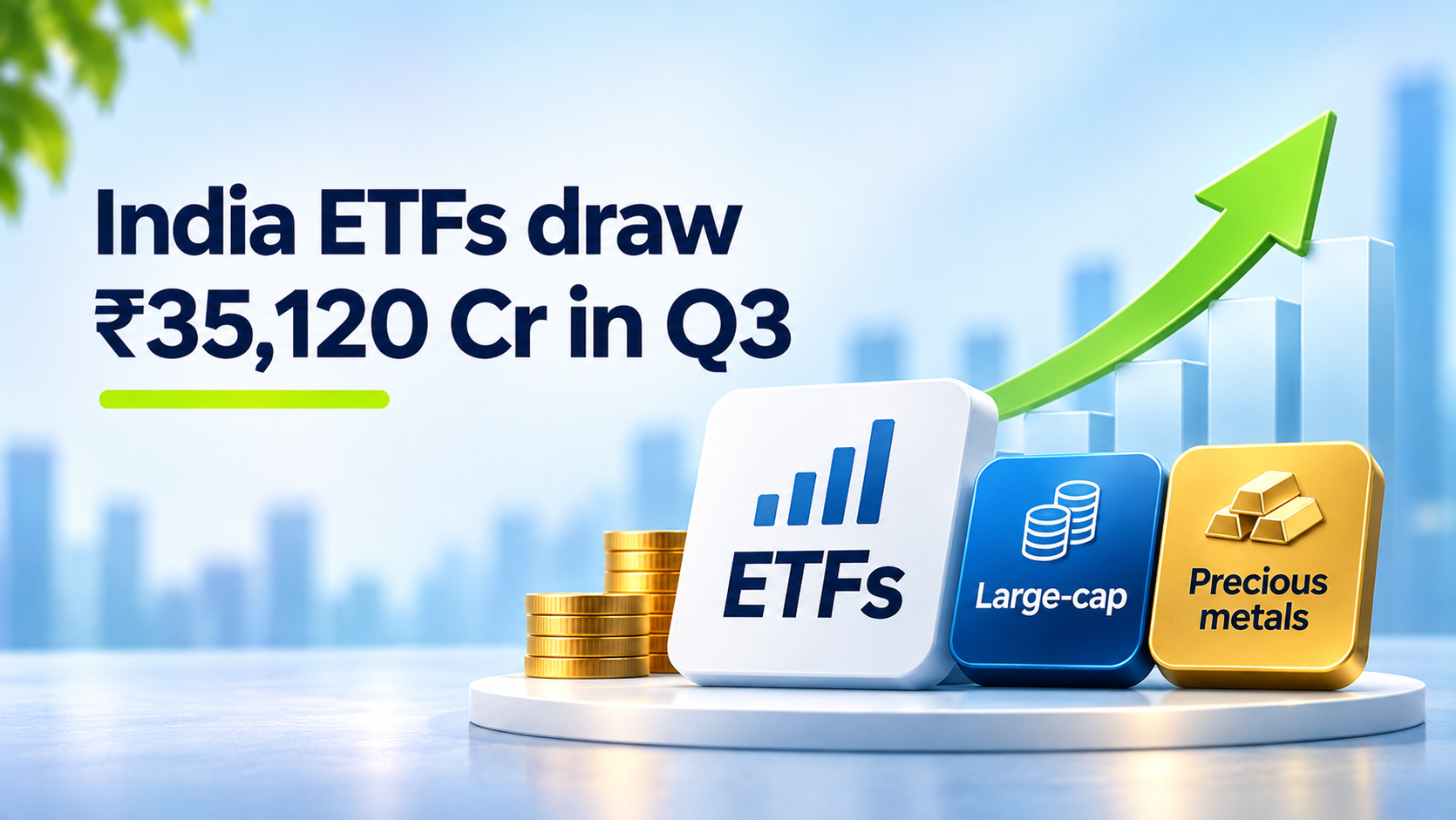
India ETFs draw ₹35,120 crore in Q3 as large-cap, precious metals lead inflows
Q3 ETF inflows stayed strong and concentrated in large-cap index and gold-linked products, signalling where client demand is shifting and where duration risk is being avoided.

Debt Mutual Funds See ₹1 Lakh Crore Outflows in June
Large June redemptions from debt funds are mainly quarter-end, tax-driven flows rather than a lasting shift away from fixed income, so MFDs should focus on explaining this seasonality to clients.


Arbitrage mutual funds swing back to inflows in October 2026 with ₹3,929 crore: Top 5 schemes by 1, 3, 5-year returns
Arbitrage funds saw a sharp flow reversal in Oct 2026 with ₹3,929 crore inflows, highlighting renewed short-term parking demand rather than higher equity risk appetite.
India ETFs draw ₹35,120 crore in Q3 as large-cap, precious metals lead inflows
Q3 ETF inflows stayed strong and concentrated in large-cap index and gold-linked products, signalling where client demand is shifting and where duration risk is being avoided.

Gold ETF inflows beat full-year 2025 total in just 10 months, cross Rs 49,000 crore
Gold ETF inflows have already exceeded last year’s full total, signalling strong client appetite for gold as a long-term diversifier despite a slower October.